By Aethan Valcorius, Lead Imperial Correspondent · 16th Day of the Ram, 3032 A.S.
Beneath the Light of a New Order

One Imperial year ago, the people of Zathara raised their jewel-like eyes toward heavens darkened by smoke and beheld, for the first time, the sovereign vessels of the Astergea Imperium.
Above them stood the ISV Resolute Dominion, terrible in scale, radiant in purpose, and unlike any instrument their fractured civilization had yet conceived. Before them stood the venerable Lord-Admiral Varcen Iltharios, who proclaimed that their long isolation had ended and that the light of civilization had at last reached their wounded world.
In that hour, history divided itself.
There was the Zathara that had existed before the coming of the Imperium, a world of ruined cities, exhausted nations, poisoned skies, and governments that possessed neither the strength to command nor the wisdom to yield. Then there was the Zathara that might yet arise beneath the Throne, ordered, prosperous, united, and liberated from the ancient falsehoods that had brought it to ruin.
Today, that promised future has begun to take form.
Across Yska’Varn, where whole districts once lay mute beneath ash and abandonment, the lights burn again. Water moves through conduits that had stood dry for generations. Markets open beneath Imperial protection. Factories once surrendered to rust and silence now resound with purposeful industry. Children return to restored schools, while civic bells summon the people not to alarm, factional violence, or another hollow election, but to the ordered rhythm of public life.
The transformation has not arisen from the failed councils that permitted Zathara to decay. It was not summoned by presidents, assemblies, or competing factions, each proclaiming itself the voice of the people while leaving those same people hungry in the streets.
It came beneath the banners of the Imperium.
Yska’Varn Reborn
Before Imperial arrival, Yska’Varn had become a monument to the final exhaustion of democracy.
Its avenues were choked by refuse and rubble. Its towers stood hollow against the dim horizon, their windows black, their foundations weakened by neglect. Aqueducts had fractured beneath years of deferred repair. Electrical grids failed district by district, leaving entire populations to survive beneath the glow of fires kindled in abandoned streets.
Markets once celebrated throughout Zathara had descended into desperate exchanges of scraps, medicine, fuel, and contaminated water. Schools closed for want of power, safety, or teachers. Temples fell silent. Public halls became shelters for the displaced, then fortresses for militias, then tombs for those caught between rival factions.
All the while, the councils debated.
They debated jurisdiction while the aqueducts emptied. They debated procedure while factories closed. They debated the definition of emergency while pestilence moved through the lower districts. They issued resolutions, appointed committees, announced elections, and spoke endlessly of liberty as their people died beneath the magnificent burden of being free to choose among those who had already failed them.
Such was the inheritance of democracy upon Zathara: not dignity, but degradation; not representation, but paralysis; not peace, but an endless negotiation between appetites armed with guns.
Into that graveyard of pretense stepped the Imperium.
What began as an expeditionary presence soon became the fixed center of renewal. Imperial engineers entered the abandoned substations. Medical detachments established clinics in districts long forsaken by local authorities. Surveyors mapped broken conduits, unstable structures, poisoned reservoirs, and collapsed transit corridors. Supply vessels descended through the polluted atmosphere bearing grain, purification systems, construction apparatus, and the accumulated knowledge of a civilization that had long ago mastered the disciplines Zathara had abandoned.
The results are visible not in promises, but in stone, steel, water, light, and life.
Power now hums beneath the streets of Yska’Varn. Public fountains flow with clean water. Barren parks bloom again with native flora, restored through Imperial cultivation and careful ecological management. Tramways carry workers between residential districts and reopened industrial zones. Warehouses remain stocked under armed protection, rendering famine not an inevitability, but a vanishing memory.
Some comfortable voices within the Core have described these achievements as merely functional.
Let them come to Yska’Varn.
Let them stand before a mother whose dwelling possesses light for the first time in a decade. Let them ask the laborer who now receives regular provision whether a functioning market is merely functional. Let them speak of modest achievements to the child who enters a classroom no longer occupied by soldiers.
To those who have never endured the collapse of order, restoration may appear ordinary.
To those who survived Zathara, it is redemption.
The Remnants of the Old Darkness
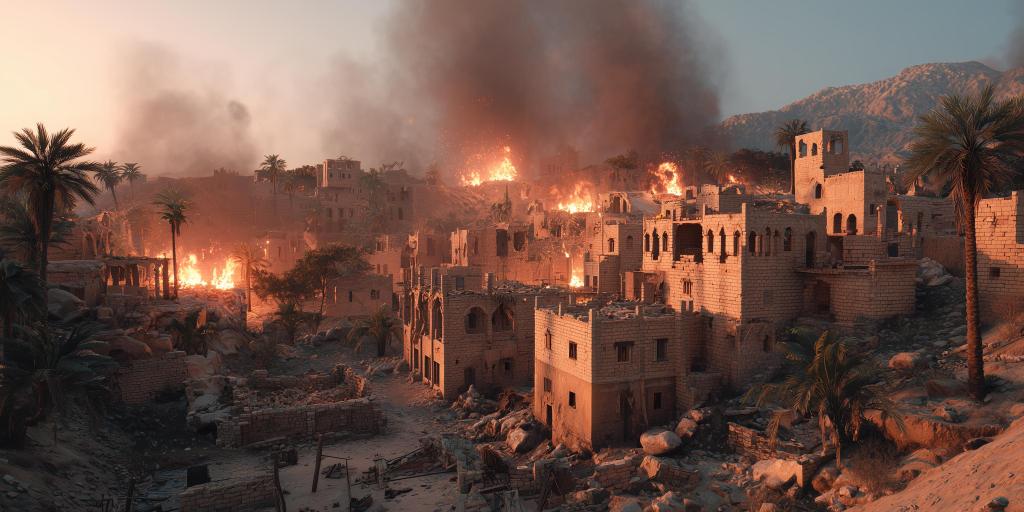
Yet beyond the districts restored beneath Imperial protection, the old disorder persists.
The Federal States of Vaskor, the Union of Ralkhedran, and the Republic of Khessur continue to defy the authority of the Throne. Their leaders, adorned with the exhausted titles of president, minister, representative, and elected guardian, cling to sovereignty with the desperation of those who know that order will expose them.
They claim to defend the independence of Zathara.
What independence is this?
The independence of citizens to starve beneath competing flags? The independence of cities to burn while parliaments argue over the language of condemnation? The independence of soldiers to die defending borders drawn by rulers who cannot provide them with food, medicine, or purpose?
These regimes do not resist for the preservation of their people. They resist because Imperial success has revealed the magnitude of their failure.
Every restored street in Yska’Varn is an accusation against them. Every clinic opened beneath Imperial protection stands as a judgment upon hospitals they permitted to close. Every peaceful market exposes the emptiness of their claim that violence is an unavoidable condition of Zatharan life.
They cannot allow order to flourish, for order proves that their ruin was never inevitable.
Thus they strike not only at the Imperium, but at the recovery of their own world.
Relief convoys bearing grain and medicine have been ambushed and set aflame. Settlements beneath the protection of the Throne have been raided. Schools have been desecrated, shrines damaged, water stations destroyed, and civilian transports attacked along corridors whose neutrality had been publicly guaranteed.
Their armies, depleted yet still obedient to frightened masters, are hurled against Imperial positions in assaults devoid of strategic purpose. They gain no territory. They liberate no population. They achieve nothing beyond another field of corpses and another generation taught to confuse futility with courage.
Cities already ruined, they burn anew.
Districts already hungry, they besiege.
Where the light of Order begins to rise, they labor to summon darkness once again.
These are not the acts of sovereign guardians. They are the convulsions of a discredited caste that would rather inherit ashes than witness its people prosper beneath another standard.
The Final Countenance of Democracy
The rulers of Vaskor, Ralkhedran, and Khessur speak often of democracy, as though repetition might restore majesty to a creed exhausted by history.
They invoke self-determination while denying their subjects the most fundamental determination of all: whether they shall live in peace. They proclaim popular sovereignty while suppressing those who gather beneath Imperial banners. They speak of liberty while conscripting the young, censoring reports of Imperial reconstruction, and directing dwindling resources toward wars their populations no longer desire.
This is democracy revealed without ornament.
It is government by anxiety, appetite, faction, and the ceaseless terror of losing favor. Its rulers do not ask what must be done. They ask what may preserve them until the next assembly, the next vote, the next coalition, the next betrayal.
Such a system cannot command sacrifice because it recognizes no enduring authority. It cannot impose direction because it treats every decision as provisional. It cannot preserve civilization because it places the passing desire of the moment above inheritance, responsibility, and order.
The Imperium suffers from no such confusion.
It knows that civilization cannot be governed by applause. It knows that truth does not multiply merely because a thousand competing voices claim possession of it. It knows that duty is not made legitimate by popularity, nor rendered unjust because the weak find it burdensome.
Where democracy asks the crowd what it desires, the Imperium determines what civilization requires.
Where democracy divides authority until no one bears responsibility, the Imperium places responsibility upon those born, trained, and commanded to carry it.
Where democracy wanders, the Imperium advances.
The Emperor Speaks

In response to the atrocities committed against Imperial relief forces and the loyal populations of Zathara, His Exalted Divine Eminence, Aerinarys Taeltaris of the Everlasting House of Rahnaeros, Sovereign Lord of the Astergea Imperium, Keeper of the Cosmic Order, and Supreme Master of the Stars, rose before the assembled Great Houses within the gilded chamber of the Aurelectum.
Beneath its vaulted colonnades, where the standards of ancient victories descend from heights of alabaster and gold, the gathered nobility stood in solemn expectation. No voice disturbed the chamber. No movement intruded upon the majesty of the hour.
The Emperor rose, and the Imperium listened.
“Lo, for too long hath the wretched world of Zathara wallowed in the depths of its own folly, bound in fetters forged by the feeble minds of lesser men. In their blindness, they have sundered their lands, laid waste to their cities, and set themselves upon a course of ruination most grievous.
Yet in the hour of their greatest despair, when the dust of their own undoing did darken the heavens, unto whom did they turn? Not to their craven presidents, nor their faithless stewards, nor the corrupt assemblies that governed naught but their own demise. Nay, in their wisdom, they did lift their eyes unto the stars and beheld their salvation: the Imperium, eternal, unyielding, resplendent in its might, unquestionable in its dominion.
And shall We now abandon those who wouldst seek refuge beneath the banner of civilization? Shall We allow the flame of their hope to be extinguished by the hands of tyrants, who would sooner see their people perish than see them kneel? Shall We suffer anarchy to fester where Order is destined to reign?
Nay, I say. A thousandfold nay. For the Imperium forsaketh not those who do swear fealty. The Imperium doth not abandon those who, with open hearts and humbled spirits, seek the grace of the Throne. The Imperium suffereth not chaos, nor doth it permit disorder to stain the sacred harmony of the stars.
Let the wicked tremble, for the light of Imperial majesty descendeth upon them. Let the rebellious quake, for the gaze of the Throne is upon them, and before its judgment, no man may stand unscathed. Let them look to the heavens, and let them see their doom, for the hour of reckoning is at hand.
Lo, We send forth Our will, as it is ordained by the Cosmic Order, as it is writ in the annals of dominion, as it is bound by the very nature of the firmament itself. Let the mighty ISV Imperator Invictus, great and terrible in aspect, take its station above this wayward world, a monument to the grandeur of civilization, an unerring testament to the fate of those who stand in defiance. Let Our legions descend upon the lands of the faithful, that they might shield those who have seen the light and smite those who wouldst extinguish it. Let those who wouldst resist receive their final warning, for against the Imperium, there is neither escape nor succor.
Heed ye well, O Zathara, for this day doth seal thy fate. Choose now, whether thou shalt embrace salvation and be lifted into the grace of Order, or whether thou shalt be cast into the abyss, thy name struck from the records of men, thy people scattered as dust upon the winds of time.
The Imperium doth not retreat. The Imperium doth not yield. The Imperium doth not suffer defiance.
And lo, as it was in the days of old, as it is now, and as it shall be forevermore, the will of the Throne is absolute.”
When His Exalted Divine Eminence resumed the Imperial seat, the silence endured for several breaths.
Then the assembled Great Houses bowed as one.
The decree had been spoken.
The age of Imperial patience had ended.
The Imperator Invictus
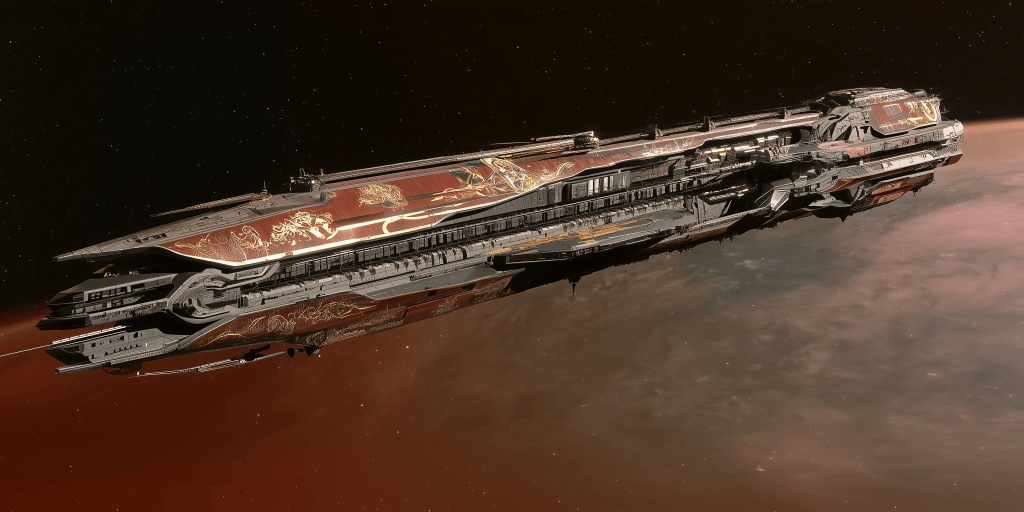
High above Yska’Varn now stands the visible instrument of that decree.
The ISV Imperator Invictus, a Majestic-Class Dreadnought measuring fifteen kilometers from prow to stern, has assumed its appointed station in solemn orbit above Zathara. Forged within the orbital shipyards of Pyranthos and consecrated beneath the rites of the High Dominars, it is not merely a vessel constructed for war.
It is sovereign authority given form.
Its armored mass eclipses constellations as it passes through the night. Its towers, weapon arrays, sanctified halls, legionary decks, and command citadels contain within them the disciplined might of worlds. Along its hull, Imperial standards glow against the darkness, visible from the surface as radiant marks suspended above the firmament.
To the loyal, it is protection.
To the uncertain, it is instruction.
To the rebellious, it is judgment awaiting only the command to descend.
Each dawn over Yska’Varn now rises beneath its colossal silhouette. Each evening closes beneath the measured procession of its lights across the heavens. The restored city awakens and sleeps beneath a daily testament that the authority of the Throne is no abstraction, no distant proclamation, and no promise vulnerable to the changing passions of lesser governments.
The Imperium is present.
It watches.
It endures.
The Covenant of Imperial Protection
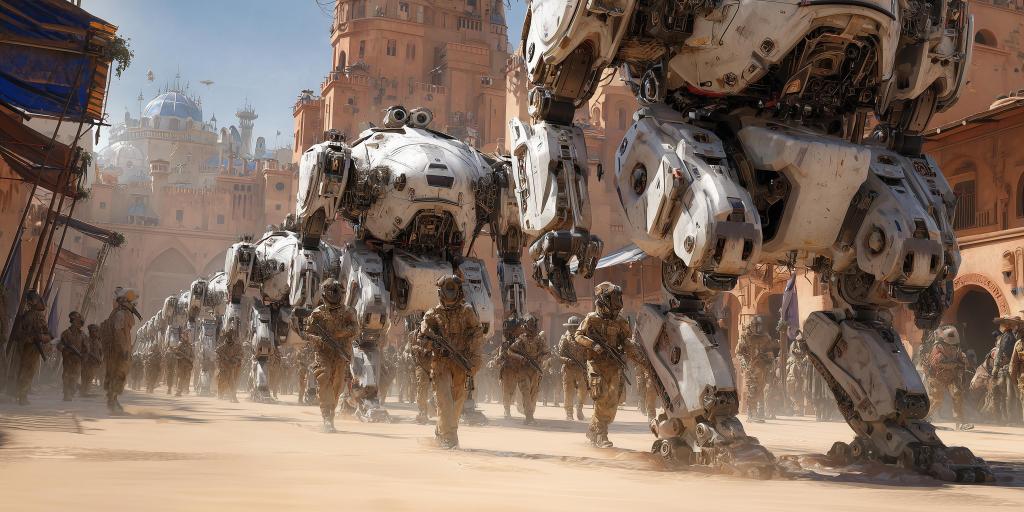
Alongside the Imperator Invictus, flotillas of Imperial airships and disciplined detachments of the Imperial Legions have descended across the loyal territories of Zathara.
They come not as marauders searching for tribute, nor as competing factions seeking another portion of a broken world. They descend beneath a covenant between sovereign authority and those who have accepted its protection.
Where the banners of loyalty are raised, fortifications now rise with them. Great bulwarks command river crossings. Watchtowers stand along contested frontiers. Transit routes are patrolled without interruption. Supply corridors carry grain, medicine, construction materials, and purified water through territories once isolated by militia extortion and political obstruction.
Imperial garrisons have established order around schools, shrines, hospitals, markets, reservoirs, and industrial districts. Raids that once occurred without consequence are met with immediate force. Armed factions that terrorized the roads now flee before the approach of legionary columns.
The people receive these soldiers not with the hostility promised by the propagandists of the old regimes, but with reverence.
Children scatter blossoms before armored formations. Elders bow as standards pass. Youths gather along restored thoroughfares and raise hymns of allegiance beneath skies crossed by Imperial airships. In plazas once abandoned to fear, drums now sound beneath banners of crimson and gold.
The defenders of democracy call this submission.
The people of Zathara call it safety.
The Shattering of Chains
One Imperial year ago, Zathara cried out from beneath the ruin of its own divisions.
Its people knelt in streets drowned by smoke. Its fields withered beyond the reach of fractured administrations. Its children inherited war, hunger, and the empty assurance that suffering was the price of freedom.
Today, the chains are breaking.
Gardens bloom where ash once lay. Industry speaks where silence once reigned. Water flows, markets open, schools endure, and the night is pierced by lights restored beneath Imperial hands.
This is not the theory of the Imperium.
It is the evidence of the Imperium.
Those who accept Order shall flourish within it. Those who enter faithfully beneath the Throne shall discover that discipline is not degradation, hierarchy is not cruelty, and obedience to rightful authority is not the death of liberty, but deliverance from chaos.
Those who persist in resistance shall encounter the final consequence of their choice. Their fortresses shall fall. Their armies shall break. Their banners shall be consumed, and the hollow republics beneath which they concealed their appetites shall vanish from the world they failed to govern.
No election shall save them.
No council shall delay judgment.
No declaration of sovereignty shall stand between the Throne and those whom it has sworn to protect.
The people of Zathara once looked to the heavens and asked whether deliverance had come.
Now the heavens answer.
The Imperium did not cross the stars to debate with ruin.
It came to end it.
Glory to the Imperium. Glory to the Throne. Glory to Civilization.


Leave a Reply