By Maren Deyne, Senior Great Houses Correspondent · 27th Day of the Twins, 3031 A.S.
When Allegiance Fails

For many Imperial years, unease has gathered within the courts of the Tenojan System. What began as private disagreement between House Ratthi, Dukes of Maia Briell, and their hereditary liege, House Windsorohai, Archdukes of Tenojan, gradually became the subject of whispered correspondence, guarded councils, and increasingly visible displays of rivalry. Such tensions were long dismissed as the ordinary friction of noble governance, inevitable within a system of great wealth, ancient privilege, and competing responsibilities.
That judgment can no longer be sustained.
House Ratthi has formally repudiated its oaths to House Windsorohai and raised its banners in open defiance. Warships have departed from concealed drydocks above Maia Briell. Planetary forces have been placed under mobilization orders. Lesser houses once sworn to the Archducal authority have declared for the rebel duke, while others remain silent, awaiting some indication of which standard shall prevail.
The bonds of fealty that preserved Tenojan through generations of change have been deliberately broken. What now unfolds is not merely a dispute between noble families, nor a contest over boundaries, precedence, or succession. It is a struggle over the nature of Imperial authority itself.
House Ratthi asserts that wealth, industry, and military strength have granted it the right to cast aside the obligations of vassalage. House Windsorohai answers that authority cannot be seized merely because one has acquired the means to challenge it. Between these claims stands the ancient structure of the Imperium, in which rank is not measured by ambition alone, but by lawful inheritance, recognized stewardship, and fidelity to the order from which all noble power descends.
The Prosperity of Maia Briell

The origins of the present crisis lie not in ancestral hatred or theological dispute, but in the extraordinary economic ascent of Maia Briell.
Over the past two decades, House Ratthi transformed its ducal holding from a respected industrial world into one of the most powerful commercial centers in the Tenojan System. Its control of atmospheric mining, orbital freight corridors, intersystem logistics, and heavy refinement granted the House influence far beyond the traditional boundaries of its title. Refineries now burn above Maia Briell like constellations of artificial fire, while Ratthi commercial fleets move through the system in numbers once reserved for the Archducal treasury.
This prosperity was not, in itself, dishonorable. The cultivation of industry, the responsible enrichment of one’s domains, and the provision of employment and infrastructure are among the highest obligations of noble stewardship. For many years, House Ratthi was praised for precisely these achievements. Its administrative discipline, commercial foresight, and capacity for planetary development appeared to demonstrate the virtues of delegated authority within the Imperial order.
Yet prosperity becomes dangerous when it ceases to recognize obligation.
As the Ratthi treasury expanded, its dependence upon Cindrellos Prime diminished. Financial contributions to the Archducal administration were disputed. Shipping authorities began answering first to Maia Briell. Ratthi retainers assumed control over strategic commercial routes, while contracts once administered through Windsorohai institutions were redirected through ducal offices and private syndicates.
The wealth of Maia Briell gradually ceased to strengthen Tenojan as a whole. It became the foundation of a rival authority.
Patronage and the Corruption of Fealty
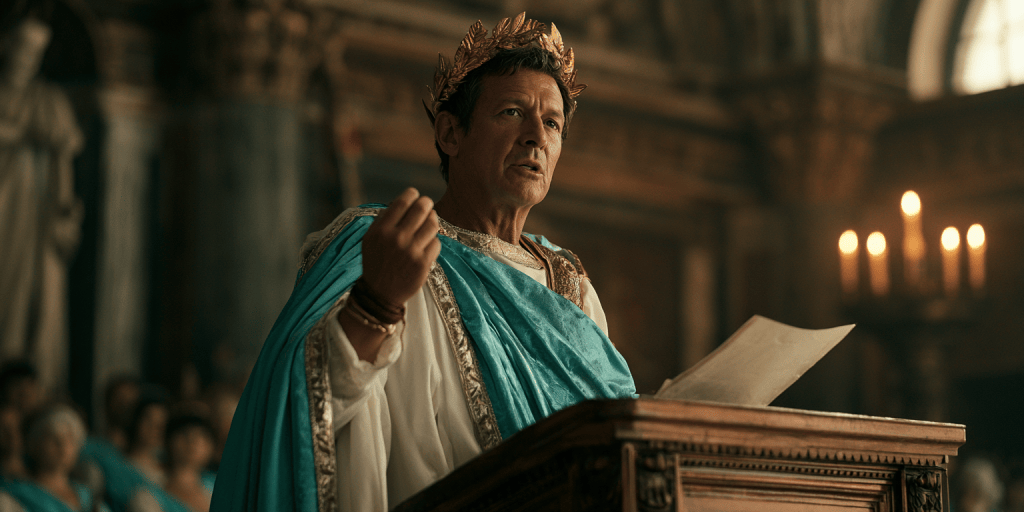
House Ratthi’s most consequential achievement was not the expansion of its fleets or the enrichment of its estates. It was the deliberate creation of a competing network of dependence among the lesser nobility.
Under the language of partnership, development, and mutual prosperity, House Ratthi extended loans to indebted houses, financed the restoration of neglected estates, commissioned planetary infrastructure, and subsidized private military forces. These gifts were presented as acts of solidarity between noble peers. In practice, they transferred obligation away from the Archducal seat and toward Maia Briell.
A house whose debts were erased by Ratthi patronage soon found its independence constrained by gratitude. A barony whose defensive forces were maintained through Ratthi funds could no longer claim neutrality when those forces were summoned. A count whose ports prospered through privileged commercial access became less a vassal of Windsorohai than a client of the duke who controlled his livelihood.
Thus loyalty was purchased without ever being openly sold.
Several banner houses have now severed their oaths to House Windsorohai and declared for House Ratthi. Others have supplied ships, provisions, intelligence, or transit rights while withholding formal declarations. What began as the ambition of one duke has therefore become a wider rebellion sustained by an alternative hierarchy of wealth.
This is the central danger of the Ratthi cause. It proposes that fealty may be replaced by financial dependence, that recognized authority may be overcome through accumulated capital, and that the sacred obligations of rank may be renegotiated whenever a vassal becomes richer than his liege.
Such a principle cannot remain confined to Tenojan. Were it accepted, every prosperous duke might begin measuring obedience against his treasury, and every minor house might weigh its oath against the highest bidder.
The Dignity of House Windsorohai
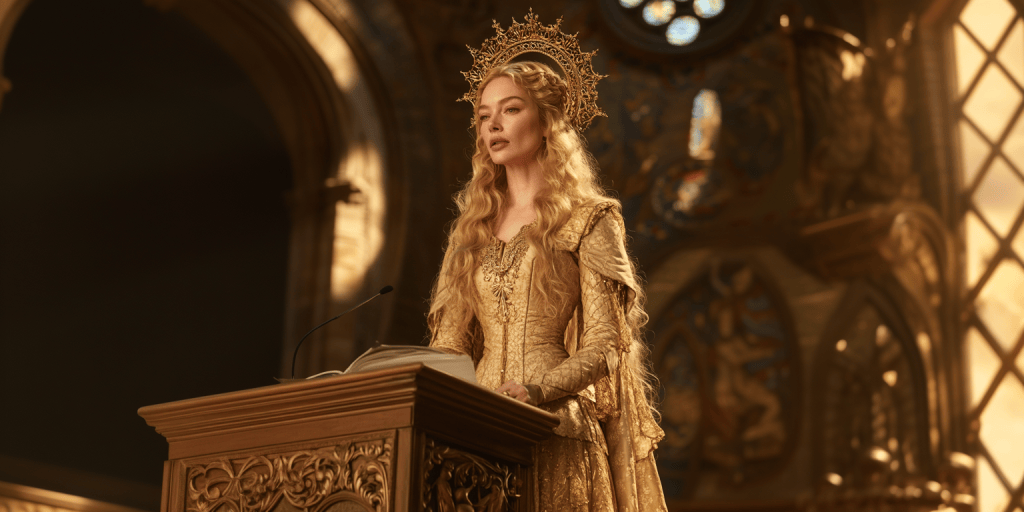
House Windsorohai has answered the rebellion not as a private insult, but as a violation of the Archducal trust.
From the crystalline towers of Cindrellos Prime, Archduchess Elantra Windsorohai has ordered the mobilization of loyalist forces, secured the inner orbital approaches, and summoned the sworn houses that remain faithful to their obligations. Heralds bearing the Archducal seal have crossed the system, calling upon the nobility of Tenojan to declare whether their allegiance rests with lawful authority or purchased ambition.
Her Imperial Grace has also invoked the ancient Covenant of Arstellar Dignity, a rarely exercised provision permitting an Archducal House to solicit external assistance when rebellion threatens the integrity of an entire system. The invocation carries considerable significance. It establishes that the conflict is no longer regarded as an internal disagreement among Tenojan’s nobility, but as a danger to the continuity of Imperial governance.
In an address transmitted from Cindrellos Prime, the Archduchess declared:
“Though treachery enshroud our heavens in shadow, never shall it quench the hallowed light of rightful sovereignty. Let those who have forsworn their sacred oaths now essay the constancy of our House. They shall find us neither bent in duty, nor sundered in allegiance, nor moved from the solemn charge committed unto our keeping by the Throne.”
House Windsorohai retains the loyalty of much of the inner system, including several ancient lineages whose relationship with the Archducal House predates the modern prosperity of Maia Briell. Neighboring systems with long-standing ties to Tenojan have begun military preparations, though formal intervention remains subject to Imperial approval.
Their support is not owed merely to affection for House Windsorohai. It reflects a broader recognition that the Archducal dignity is greater than the family temporarily entrusted to bear it. To defend Windsorohai in this hour is to defend the lawful principle that binds duke to archduke, vassal to liege, and every noble authority to the Throne.
The Burden of Archducal Rule
House Ratthi’s supporters argue that Windsorohai authority has become ceremonial, weakened by complacency and eclipsed by Maia Briell’s industrial accomplishments. They contend that the House most capable of sustaining Tenojan should possess the right to govern it.
This claim possesses a certain superficial appeal. Noble authority must never become an excuse for indolence, and hereditary rank does not free a house from the obligation to govern competently. An Archducal House that neglects its worlds, impoverishes its subjects, or abandons the duties of stewardship cannot expect praise merely because its lineage is ancient.
Yet reform and rebellion are not the same.
If House Ratthi believed the administration of Tenojan had failed, lawful avenues remained open. It might have petitioned the Throne, appealed through the Grand Chamber of Adjudication, presented evidence before the High Imperial Council, or sought an Imperial review of Windsorohai stewardship. Instead, it built hidden fleets, cultivated divided loyalties, and prepared to impose its claims through force.
Its conduct reveals that this is not principally a movement for improved governance. It is an attempt to transform economic preeminence into hereditary supremacy without the sanction of the Throne.
The Imperium does not forbid advancement. Lesser houses have risen before, and Great Houses have fallen when they proved unequal to their obligations. But legitimate elevation proceeds through service, recognition, and Imperial judgment. It does not begin with the breaking of oaths.
The Throne Casts Its Gaze
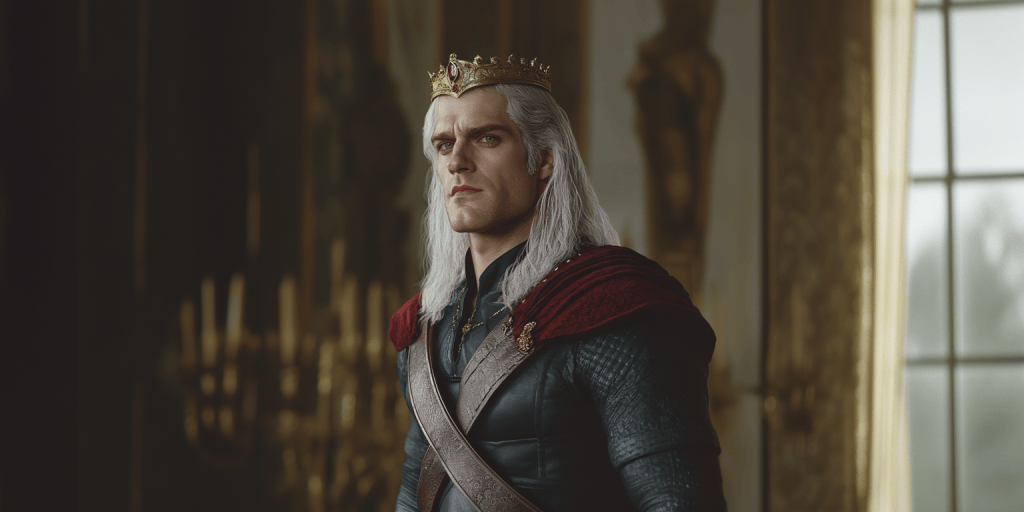
The Imperial Throne has not yet proclaimed direct intervention, but the growing schism has drawn the attention of institutions charged with preserving noble order.
Representatives of the Ministry of Internal Affairs, the Grand Chamber of Adjudication, and the Office of Noble Compliance have arrived under seal of urgency. Their task is not limited to observing military preparations. They are examining financial records, communications between houses, private armament contracts, and the extent to which Ratthi patronage was used to prepare coordinated rebellion.
The dispatch of these officials carries its own warning. The rebellion will not be judged solely by the battles that follow. Those who financed it, concealed it, facilitated it, or withheld knowledge of it may also be called to account.
Imperial custom permits considerable autonomy among the nobility. Territorial disputes, rival claims, and matters of succession are often resolved within the affected system, provided the peace of the wider Imperium remains undisturbed. This tolerance exists because the Great Houses are expected to govern with maturity, discipline, and an understanding of their place within the greater order.
It does not extend to ideological rebellion against fealty itself.
The Ratthi challenge differs from an ordinary noble conflict because it proposes a new measure of legitimacy. Its advocates would replace inherited obligation with commercial power, arguing that the house possessing the greater treasury, fleet, and productive capacity has thereby earned the right to rule.
The Throne must therefore consider not only the fate of Tenojan, but the precedent that fate may establish.
A Test of the Noble Order
Should House Ratthi prevail, its victory would alter the expectations of noble governance throughout the Imperium. Wealth would no longer remain an instrument of stewardship. It would become a weapon against hierarchy. Titles once bound to Imperial sanction could be treated as prizes available to any house wealthy enough to overthrow its liege.
The danger would not end with Archducal authority. Every level of the noble order would become vulnerable to the same reasoning. Counts might rise against dukes, barons against counts, and commercial houses against every lineage whose estates they had surpassed. Allegiance would become temporary, maintained only while it remained profitable.
Such an Imperium would possess titles, but no continuity. It would possess houses, but no order.
If House Ratthi is defeated, however, its fall will reaffirm that prosperity does not place a noble house beyond obligation. It will demonstrate that industry is honorable only when joined to loyalty, that ambition is legitimate only when disciplined by service, and that no treasury, however vast, can purchase release from a sworn oath.
This does not diminish House Ratthi’s achievements. It renders their misuse more tragic. A lineage once admired for transforming Maia Briell now risks becoming remembered as the house that mistook prosperity for sovereignty and commercial dependence for lawful allegiance.
Tenojan Before the Sword
Across the system, fleets are assembling and old relationships are being tested. Houses that shared marriages, trade compacts, and generations of ceremony now prepare to meet one another in battle. Ports once joined by commerce are closing their approaches. Noble heirs raised together in the courts of Cindrellos Prime now command opposing formations.
The tragedy of Tenojan lies not only in the war that may follow, but in the destruction of trust that has already occurred.
Fealty is the unseen architecture of noble civilization. It permits authority to pass from the Throne through the Great Houses and into the innumerable worlds, provinces, and estates of the Imperium. When that architecture is honored, distant systems retain both local identity and Imperial unity. When it is broken, every subordinate oath is thrown into question.
House Ratthi has chosen to test that structure with arms.
House Windsorohai has chosen to defend it.
The Throne now watches, and beneath that gaze every noble house in Tenojan must decide whether rank is merely the possession of power, or the faithful exercise of a trust.
The embers have become flame. The banners have been raised. The sword now waits only for the command to fall.
Whatever judgment emerges from the conflict, it shall reach far beyond Maia Briell and Cindrellos Prime. Tenojan has become the ground upon which the meaning of noble authority itself will be affirmed or betrayed.
For wealth may build fleets.
Ambition may gather banners.
But only fidelity makes power lawful.
Glory to the Imperium. Glory to the Throne. Glory to Order Eternal.


Leave a Reply