By Maren Deyne, Senior Great Houses Correspondent · 5th Day of the Fish, 3031 A.S.
By Order of the Throne: The Remaking of Hikari-no-Ten

By the Supreme Edict of His Exalted Divine Eminence, Aerinarys Taeltaris of the Everlasting House of Rahnaeros, Sovereign Lord of the Astergea Imperium, Keeper of Order, and Supreme Master of the Stars, the ancient order of the Hikari-no-Ten System has been irrevocably remade.
The decree records both a judgment and an elevation. House Aerysian, having abandoned the obligations upon which its authority rested, has been extinguished in title, blood, property, and memory. House Valaeryn, whose allegiance remained unbroken throughout the conspiracy, has been raised to the Archducal dignity and entrusted with stewardship over the system in its entirety.
This transition must not be understood merely as the replacement of one lineage by another. It is the restoration of lawful continuity to a system whose stability had been imperiled by private ambition. Where betrayal threatened the bonds of allegiance, fidelity has been rewarded. Where hereditary authority was corrupted into an instrument of rebellion, the Sovereign Will has restored its proper purpose. Where House Aerysian sought to place its own advancement above the peace of the Imperium, House Valaeryn demonstrated that the highest expression of noble ambition is service.
The distinction of a Great House is not measured by the antiquity of its name alone, nor by the brilliance of its courts, the reach of its estates, or the number of banners sworn beneath it. It is measured by the order it preserves, the obligations it fulfills, and the loyalty it maintains when loyalty demands sacrifice.
By that measure, House Aerysian was found unworthy.
By that same measure, House Valaeryn has been raised.
The Breach of Noble Trust
With the full and unquestioned authority of the Throne, House Aerysian has been stripped of every title, holding, privilege, estate, hereditary dignity, and legal distinction once entrusted to its name. Its seals have been broken, its banners reduced to cinders, its palaces seized, and its authority removed from every court and institution of Hikari-no-Ten.
Its crime was not a failure of administration, nor a dispute of precedence among noble equals. House Aerysian conspired to summon banners against the Imperial Throne. Its leaders sought to transform inherited stewardship into private dominion, calling subordinate houses into a rebellion intended to sever Hikari-no-Ten from the greater order of the Imperium.
In doing so, they violated the covenant upon which noble authority rests.
The Great Houses do not possess their territories as objects of personal ownership. Their rank is held in trust beneath the Sovereign Will. Their palaces, fleets, estates, and hereditary honors exist so that they may preserve stability, administer justice, protect their subjects, and maintain the ordered relationship between the Throne and the distant worlds of the Imperium.
To betray that trust is therefore more than an offense against the Emperor. It is an attack upon the structure of continuity itself.
House Aerysian believed the grandeur of its name would shield it from judgment. Its leaders mistook inheritance for immunity and authority for possession. They imagined that ancient blood could excuse present treason, and that the obedience of their vassals belonged to them rather than to the Imperial order from which all lawful allegiance descends.
Their error was complete.
Their communications were intercepted before their fleets could assemble. Their prospective allies were identified before their banners could be raised. Estates were surrounded, military commands secured, and every branch of the conspiracy brought beneath Imperial judgment before open conflict could disturb the peace of the system.
House Aerysian was not defeated in battle.
It was denied the battle through which it might have sought false glory.
The Extinction of a Treasonous Line
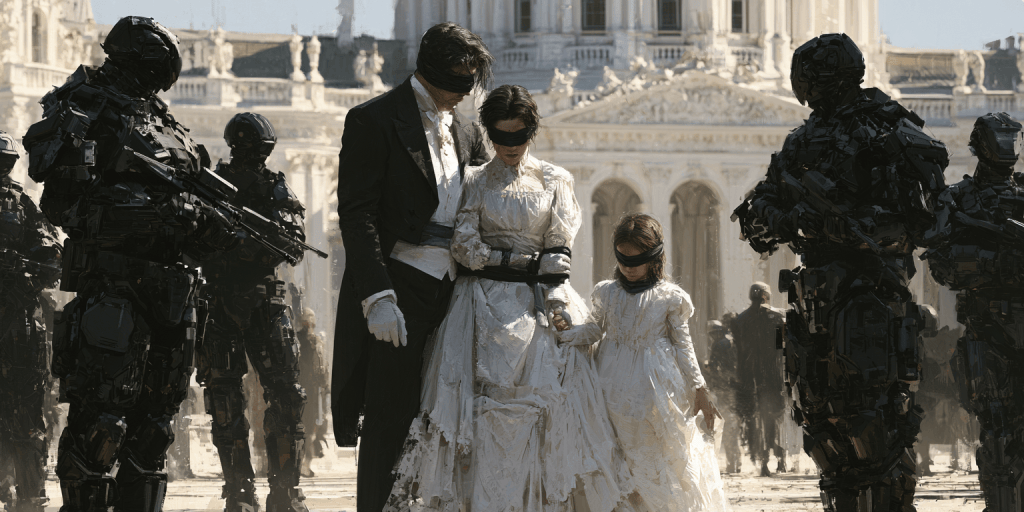
No public trial was required. No assembly of peers was summoned to debate what had already been established beyond dispute. The evidence was comprehensive, the intent unmistakable, and the danger too grave to permit hesitation.
Every acknowledged member of House Aerysian was put to death by order of the Throne. Its ruling family, cadet branches, recognized descendants, and those bound to its blood through lawful succession were extinguished. No heir remains to revive its claim. No surviving branch may petition for restoration. No future generation shall inherit its grievance or gather beneath its forbidden name.
The judgment extended beyond House Aerysian itself.
Those lesser houses that pledged support, exchanged assurances, prepared forces, concealed the conspiracy, or allowed themselves to be counted among its prospective allies were subjected to the same final sentence. The Throne judged that treason does not begin only when weapons are drawn. It begins when allegiance is knowingly withdrawn, when private ambition is placed above lawful duty, and when a noble house entertains the destruction of the order it has sworn to preserve.
Some had not yet committed their fleets. Some had not yet declared themselves openly. Some may have believed that hesitation would preserve their innocence should the conspiracy fail.
The Throne recognized no such distinction.
A house entrusted with authority cannot stand with one hand upon its oath and the other upon the hilt of rebellion. The willingness to betray, once proven, carries within it the same danger as betrayal accomplished. Every conspiratorial lineage was therefore extinguished, its holdings confiscated, its banners destroyed, and its hereditary claims rendered void.
This judgment was not an expression of anger without purpose. It was an act of dynastic preservation. A spared heir might have become a symbol. A surviving branch might have maintained a grievance. A pardoned ally might have carried the memory of rebellion into another generation, passing treason from parent to child as though it were an inheritance worthy of protection.
The Throne permitted no such legacy.
House Aerysian has ceased to exist.
Its name no longer carries force in law, precedence, genealogy, or governance. Its estates have been redistributed, its military commands transferred, and its former domains placed under loyal administration. Where its banners once hung in the halls of Suiren, only the marks of their removal remain.
For those who betray the Throne, there is no nobility in death.
There is only extinction.
The Mandate of Ascendancy
Into the place left vacant by treason, the Throne has elevated a lineage proven worthy of the burden of greater authority.
By Imperial decree, House Valaeryn has been granted stewardship over the Hikari-no-Ten System, and its patriarch, Kaelen Valaeryn, formerly Duke of Hinomori, has been invested as Archduke of Hikari-no-Ten.
This elevation is not merely a reward for loyalty displayed during a single crisis. It is the recognition of a longer record of disciplined governance, military preparedness, measured judgment, and service to the Imperial order. House Valaeryn did not preserve its allegiance because victory was certain. It preserved its allegiance because loyalty was its duty.
When rebellion offered opportunity, House Valaeryn did not bargain with uncertainty. When conspirators sought to test its ambition, it refused advancement purchased through disorder. When the stability of the system stood in question, it placed the continuity of Imperial governance above the fortunes of its own name.
Such restraint is among the rarest virtues of nobility.
The unworthy seek authority for the elevation it brings them. The worthy accept authority for the obligations it imposes.
House Valaeryn now inherits not only the splendor of Archducal rank, but its immense responsibilities. It must reconcile the remaining noble hierarchy, restore confidence among the system’s worlds, reorganize commands disrupted by the purge, and ensure that the removal of treason is followed not by uncertainty, but by durable peace.
Its triumph is therefore inseparable from its burden.
The Succession of Hinomori
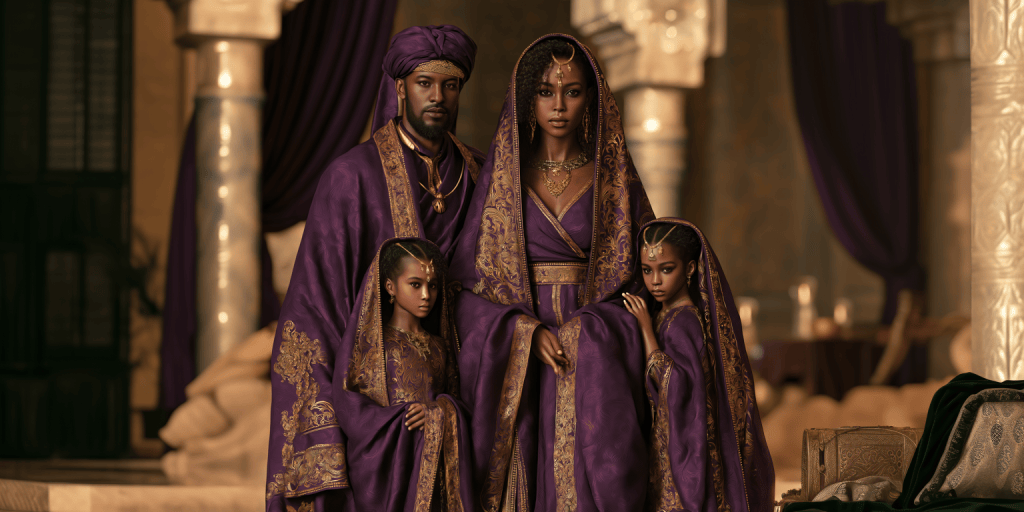
The elevation of Kaelen Valaeryn requires the House to relinquish its ancestral ducal claim upon Hinomori. The world that formed the foundation of Valaeryn power must now be entrusted to another lineage capable of preserving its traditions, institutions, and place within the renewed order of Hikari-no-Ten.
Within the courts of the system, attention has gathered around Baron Omukade of House Zha’kembwe, a longstanding vassal of House Valaeryn and Warden of the Barony of Mardenleigh. His tenure has been distinguished by careful administration, agricultural renewal, strategic foresight, and an allegiance maintained without spectacle or uncertainty.
Should the Throne approve his elevation, House Zha’kembwe would inherit more than a title. It would receive custody of a world whose stability remains essential to the authority of the new Archducal House.
The possibility reflects the ordered nature of Imperial succession. When a worthy house ascends, it creates space for another to assume greater responsibility beneath it. Authority proceeds through recognized ranks, each linked by duty to those above and stewardship toward those below. In this manner, elevation strengthens the whole rather than merely enriching the individual.
Imperial Chamberlain Varstos Ilmyr, who oversaw the transfer of titles and the dissolution of the condemned estates, described the principle in uncompromising terms:
“The Imperium has no patience for mediocrity, no tolerance for hesitation, and no mercy for treason. The Throne does not merely bestow power. It entrusts power to those proven worthy of its burdens. House Valaeryn stands today because its loyalty endured when others surrendered themselves to ambition. This is the will of His Exalted Divine Eminence. This is the judgment of Order itself.”
Suiren: The Crown Restored

To govern Suiren is to command the political, cultural, and economic heart of Hikari-no-Ten. Beneath the light of the twin stars Kharan and Suzaku, its bioluminescent seas surround towering metropolises, ancient ceremonial precincts, and the institutions through which the system has been governed for generations.
Suiren is more than an Archducal capital. It is the visible expression of lawful continuity within Hikari-no-Ten.
Under House Aerysian, that continuity was corrupted. The halls intended to preserve the system’s unity became chambers of conspiracy. Networks of vassalage that should have maintained stability were twisted into instruments of private allegiance. The authority of the Archducal office was used not to bind the system more closely to the Imperium, but to prepare its separation from it.
Those chambers have now been cleansed. The seals of the condemned lineage have been removed, its household dissolved, and every office compromised by its influence placed under examination.
Above the palaces of Suiren, the banners of House Valaeryn now rise beneath the greater standard of the Imperium.
Grand Councilor Severian Duthain described the transfer as the restoration of the capital’s proper dignity:
“It is fitting that Suiren should pass into the stewardship of those whose loyalty did not waver. House Valaeryn has been tested not only in danger, but in temptation, and it emerged faithful. Its presence upon Suiren shall restore confidence to the system and remind every noble lineage that devotion is not merely praised. It is recognized, preserved, and rewarded.”
The installation of House Valaeryn must therefore be understood not as the occupation of an abandoned court, but as the reconsecration of an office. The Archducal dignity survives because it is greater than any single family entrusted to bear it. House Aerysian failed that office and was destroyed. House Valaeryn now assumes it under the watch of the Throne and the judgment of history.
A System Reforged
With House Valaeryn established as the lawful steward of Hikari-no-Ten, the work of restoration begins.
Trade routes disrupted by the conspiracy will be secured. Military commands will be reorganized beneath officers whose allegiance is beyond question. Confiscated estates will be transferred to houses with proven records of service. Suiren’s governing institutions will be renewed, and the subordinate worlds of the system will be brought into a strengthened relationship with their new Archducal authority.
Prosperity alone, however, will not define the success of House Valaeryn. Its greater responsibility will be to restore trust. The noble hierarchy of Hikari-no-Ten must once again understand that allegiance is neither negotiable nor temporary, and that the authority granted by the Throne exists only so long as it serves the peace and continuity of the Imperium.
In his first address as Archduke of Hikari-no-Ten, Kaelen Valaeryn spoke before the assembled nobility, military commands, and citizenry of Suiren:
“Let it be known that this is the will of the Throne, and through the Throne, the will of Order everlasting. I take up this mantle neither for mine own glory, nor for the exaltation of my House alone, but in solemn service to the Imperium by whose sacred trust it hath been bestowed.
Under our stewardship, Hikari-no-Ten shall know strength without cruelty, stability without stagnation, and prosperity founded upon duty. It shall stand secure within its rightful place in the celestial design ordained by His Exalted Divine Eminence.
Before the Throne, before the noble houses, and before all those entrusted unto our care, I pledge that we shall neither falter in our purpose nor forget the treason by which this hour was made necessary. Beneath the eternal light of the Throne, Hikari-no-Ten shall rise renewed, and its radiance shall surpass all that came before.”
The words reflect the principle upon which the new order must stand. House Valaeryn has not been granted Hikari-no-Ten as a prize taken from a defeated rival. It has received the system as a trust, carrying duties proportionate to the grandeur of its elevation.
The fall of House Aerysian and the ascent of House Valaeryn shall therefore be remembered as inseparable events. One lineage demonstrated that ancient rank cannot survive the abandonment of duty. The other proved that loyalty, restraint, and service remain the surest foundations of legitimate power.
House Aerysian possessed inheritance without fidelity.
Its allies pursued ambition without obligation.
House Valaeryn demonstrated loyalty worthy of dominion.
Where treason fractured the natural bonds of allegiance, the Throne has restored balance. Where corruption threatened the inheritance of future generations, judgment has secured continuity. Where one Great House surrendered itself to private ambition, another has accepted the greater burden of Imperial service.
The Imperium does not endure through titles alone.
It endures because worthy houses uphold the obligations those titles represent.
Glory to the Imperium. Glory to the Throne. Glory to Order Eternal.


Leave a Reply